Your one-minute strategy ran all night. Why are there still no trades?
A one-minute chart sets the observation interval. Entry rules and order outcomes determine trades. Follow market data, signals, submission and fills to locate the wait.
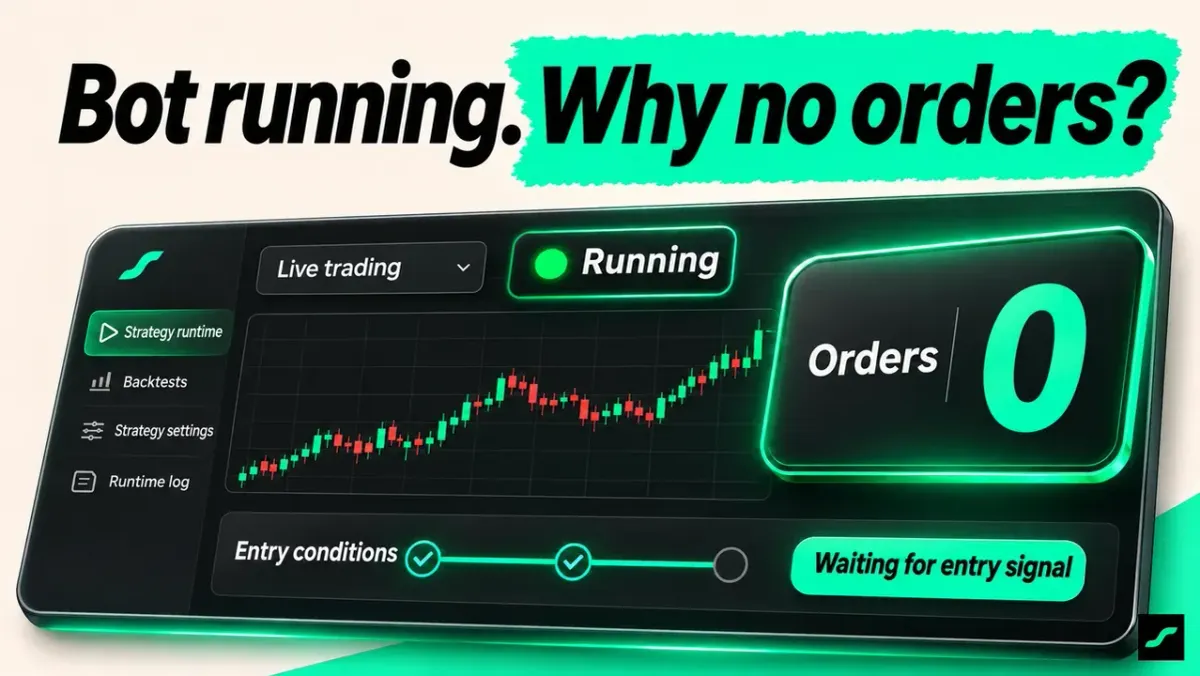
The strategy says running, but it has made no trades all night. Follow four stages: fresh market data, entry signals, order submission and fills. One-minute candles set the observation interval; a trade still needs its conditions to pass and its order to execute. Which stage is holding this run up?
These are separate checks when a trading bot is not placing orders. In AlgoRover's runtime monitoring, match the current revision and instance first, then follow one record through the process. That separates waiting for conditions from a stopped data feed or an order problem.
Check the running instance and latest candle first
I selected a one-minute strategy and waited all night. It says running, but positions and orders are both zero. Is that normal?
Check when the instance started and the timestamp of its latest processed candle. Then inspect the market-data connection.
Complete any pending startup confirmation for that instance. If it is running and processing fresh data, inspect entry signals next. Instance status and submitted orders describe separate stages.
Do one-minute candles imply a trade every minute?
The candles are current. If the strategy checks every minute, why hasn't it bought?
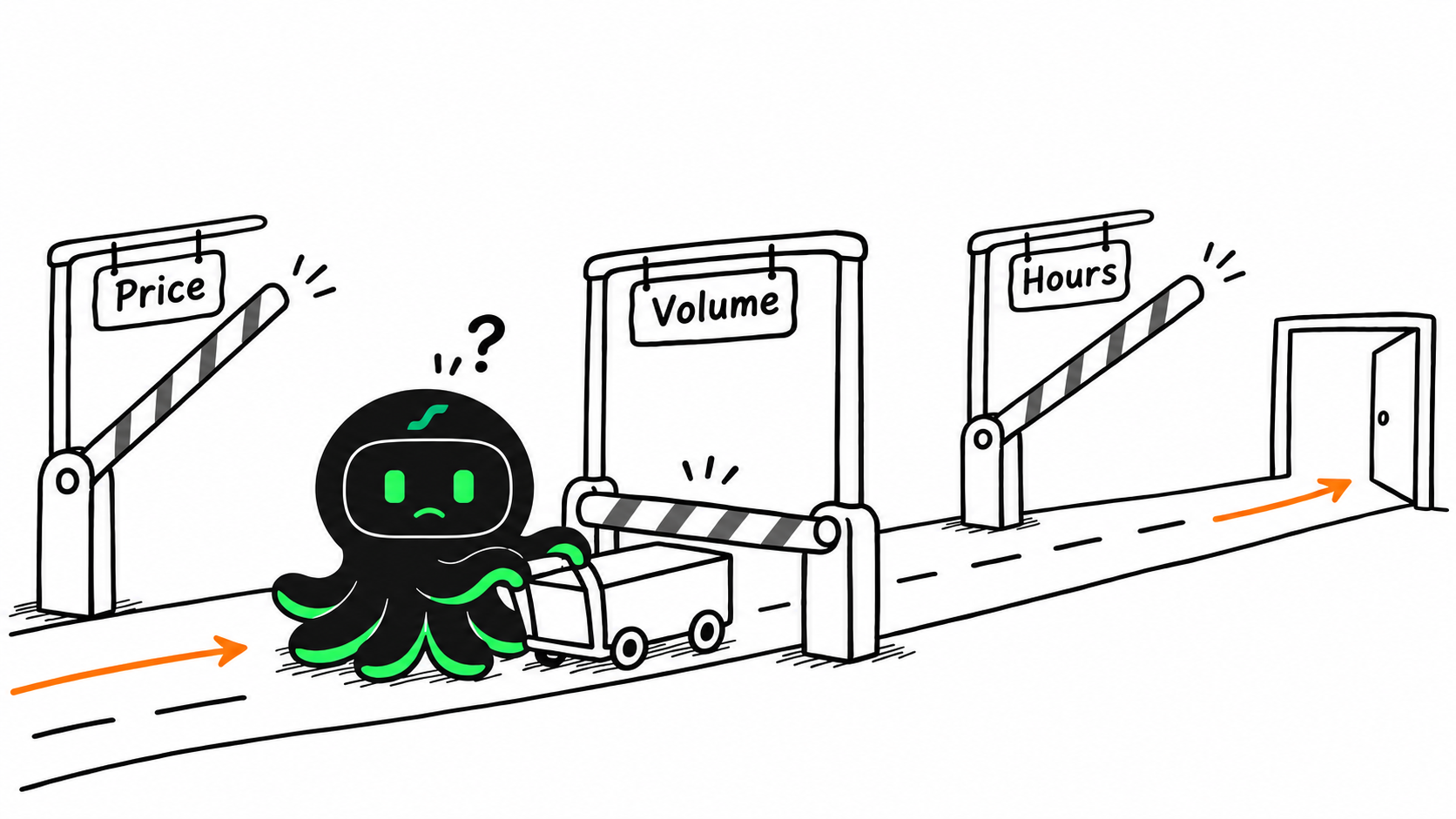
Inspect what it checks. A strategy may require a local low, a sufficient price decline and a volume condition together. Each new candle is another evaluation of those rules.
A local-low rule may need several later candles for confirmation. Trading hours, warm-up and cooldown can also delay entry signals even on a one-minute interval.
Would asking which condition is missing be more useful?
Ask for the current rules, latest evaluation time, each condition's result, and any trading-window or risk-control restriction.
Why can an entry signal exist without a filled order?
The log contains a buy signal, but the account still has no fill.
Follow that signal forward. Was an order submitted? Did the exchange accept it? Was it filled, partly filled, canceled or rejected?
With no submission, check positions, cooldown and risk controls between the signal and order. For accepted but unfilled orders, inspect price, validity and cancellation records. For a rejection, retain the exchange response and check minimum order size, quantity increments, margin and permissions.
| Observed record | Next check |
|---|---|
| Fresh market data | Each entry condition's result |
| Signal generated | Order submission and blocking rules |
| Order accepted | Fill, partial fill, cancellation or expiry |
| Order rejected | Exchange error and account/order parameters |
Ask AI to inspect runtime logs, signals and orders
This ties the answer to the current instance and specific records. An unmet condition explains the wait; a stale feed or rejection points to a narrower next check.
A running trading bot with no trades: common questions
What should I check first when a trading bot is not placing orders?
Match the running instance and latest market-data time, then inspect entry conditions, the trading window, position limits and submission records. If an order exists, follow its acceptance and final execution status.
Does a one-minute strategy always trade more than a five-minute strategy?
Trade frequency depends on the full rules and test period. Hold other settings constant, then compare completed trades, fees, holding times and maximum drawdown.
Should I use the same checks for a demo account with no orders?
Start with data, signals and orders, and verify the demo account, exchange environment and contract. If the backtest traded, compare revisions, data periods and initialization with the running instance.
How do I verify that an AlgoRover strategy is still running correctly?
Check its revision, start time and latest processed candle in runtime monitoring, then inspect recent signals and orders. Process status, fresh data and actual fills each need their own check.